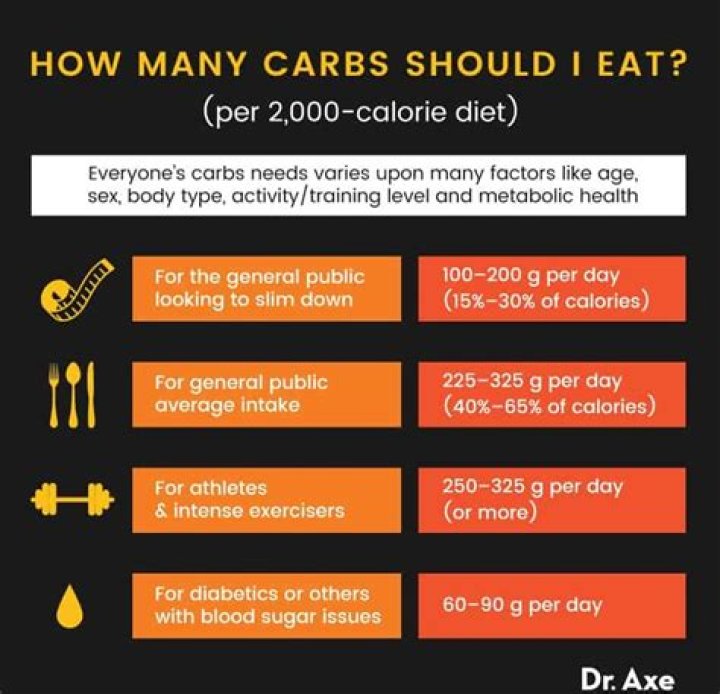
The Dietary Guidelines for Americans recommends that carbohydrates make up 45 to 65 percent of your total daily calories. So, if you get 2,000 calories a day, between 900 and 1,300 calories should be from carbohydrates. That translates to between 225 and 325 grams of carbohydrates a day.
What is my RDA for carbohydrates?
The Recommended Dietary Allowance (RDA) of carbohydrates for children and adults is 130 grams per day. This is the average minimum amount the brain requires to function properly. The Acceptable Macronutrient Distribution Range (AMDR) for total carbohydrates is 45-65%.
Why is there no RDA for carbohydrates?
The lack of an RDI or AI for total carbohydrates in no way reflects a lack of value as a key component of the diet. The type of carbohydrate consumed is paramount in terms of health outcome (see chronic disease section and FNB:IOM 2002).
What is the RDA for carbohydrates quizlet?
What is the RDA for carbohydrates? 130 grams.What is the current RDA for carbohydrates for adults Nasm?
Current Versus Recommended Intakes The RDA for carbs for adult that are over 19 years of age is 130 grams per day. This is the minimum that is needed for normal metabolism and the use of fuels. The average intake is 47.4 – 49.6 % of total calories for men and women, in that order. Again, the RDA is 130 grams per day.
What is the RDA for carbohydrate for both children aged 1 3 years and adults?
Total and glycemic carbohydrates An intake of 130 g per day for both children (>1 year) and adults has been estimated to be sufficient to cover the needs of glucose for the brain. However, these levels of intake are not sufficient to meet energy needs in the context of acceptable intake levels of fat and protein.
Why is the RDA for carbohydrate intake set at 130g day?
Recommended Dietary Allowance The RDA of 130 grams of carbohydrate per day is based on the amount of glucose needed by the brain in a day. That amount of carbohydrate, however, is less than the amount that would be the lower limit of the Acceptable Macronutrient Distribution Range (AMDR).
How many carbs should type 2 diabetic eat daily?
On average, people with diabetes should aim to get about half of their calories from carbs. That means if you normally eat about 1,800 calories a day to maintain a healthy weight, about 800 to 900 calories can come from carbs. At 4 calories per gram, that’s 200–225 carb grams a day.What is the RDA for carbohydrates to prevent ketosis?
Ketogenic diets as typically implemented in scientific studies limit dietary carbohydrate to <50 g per day with varying amounts of fat and protein (3, 4). “Low-carbohydrate diets” refer to carbohydrate intake below the recommended dietary allowance of 130 g/day (3), which may not be low enough to induce ketosis (5).
How many carbs are in a banana split?Banana Split Ice Cream (0.5 cup) contains 28g total carbs, 27g net carbs, 14g fat, 4g protein, and 260 calories.
Article first time published onHow many grams of carbs should a diabetic eat each day?
According to the CDC, people living with diabetes should get about 45% of their total calories each day from carbohydrates. For females, they recommend 3–4 servings of carbohydrates, at 15 grams (g) per serving. For males, they recommend a slightly higher amount of 4–5 servings. This is equivalent to 45–75 g each meal.
What glycemic score ranks a carbohydrate food as a high GI food?
The GI scores are as follows: low GI foods: 55 or less. medium GI foods: 56–69. high GI foods: 70 or above.
What is the RDA for protein Nasm?
According to the NASM Nutrition course, the current recommended daily allowance (RDA) for protein intake for healthy adults is 0.8 g grams per kilogram (0.36 grams per pound) of bodyweight per day (1). That would calculate to approximately 64 grams of protein a day for a 176-pound (80 Kg) person (176 x 0.36).
What is protein RDA?
The Recommended Dietary Allowance (RDA) for protein is a modest 0.8 grams of protein per kilogram of body weight. The RDA is the amount of a nutrient you need to meet your basic nutritional requirements.
Does the brain really require 130 grams day of carbohydrate from the diet?
Although a zero-carb diet isn’t recommended because it eliminates many healthy foods, you can definitely eat less than 130 grams per day and maintain good brain function. It’s a common myth that you need to eat 130 grams of carbs per day to provide the brain with energy.
Are raffinose and Stachyose examples of polysaccharides?
Examples are raffinose and stachyose. Raffinose has three sugar units while stachyose has 4 sugar units. Polysaccharides have more than 10 sugar units. Examples are starch, and dietary fibers such as cellulose, pectins, gums, fructans, and mucilages.
What is the RDA for carbohydrate for children?
Carbohydrates are the body’s most important and readily available source of energy. They’re a necessary part of a healthy diet for both kids and adults. The two main forms of carbs are: simple carbohydrates (or simple sugars): including fructose, glucose, and lactose, which also are found in nutritious whole fruits.
What is the RDA for protein for a 20 year old male?
Protein requirements for adults ages 18-65 The current recommended dietary allowance (RDA) for protein is 0.8 grams per kilogram (g/kg) of body weight a day for adults over 18. So according to this formula, a person who weighs 150 pounds requires at least 55 grams of protein each day.
How many carbohydrates should the average sixteen year old female consume per day?
According to the Mayo Clinic, 45 to 65 percent of your daily calories should come from carbohydrates. That’s equal to about 225 to 325 grams of carbs if you eat 2,000 calories a day.
Is 100 carbs a day low carb?
While there is no strict definition of a low-carb diet, anything under 100–150 grams per day is generally considered low-carb. This amount is definitely a lot less than the standard Western diet. You may achieve great results within this carb range, as long as you eat unprocessed, real foods.
How much carbs do I need a day to lose weight?
According to the Food and Drug Administration (FDA), the Daily Value (DV) for carbs is 300 grams per day when eating a 2,000-calorie diet (2). Some people reduce their daily carb intake with the aim of losing weight, cutting down to around 50–150 grams per day.
How can I eat less than 50 grams of carbs a day?
If your goal is to remain under 50 grams of carbs per day, then there is room for plenty of veggies and one fruit per day. Again, if you’re healthy, lean and active, you can add some tubers like potatoes and sweet potatoes, as well as some healthier grains like rice and oats.
What is the number 1 worst carb?
1. Bread and grains. Bread is a staple food in many cultures. It comes in various forms, including loaves, rolls, bagels, and flatbreads, such as tortillas.
What are the worst carbs for diabetics?
- Processed grains, such as white rice or white flour.
- Cereals with little whole grains and lots of sugar.
- White bread.
- French fries.
- Fried white-flour tortillas.
Is 25 grams of sugar a lot for a diabetic?
Not exceeding the maximum amount of calories per day – 2,000 calories per day for women and 2,500 calories per day for men. Reducing sugar intake to a maximum of 6 teaspoons per day (25g).
How much is a Dairy Queen banana split?
FOODPRICEAdd Extra Stuff$0.69Classic TreatsPeanut Buster Parfait$4.39Banana Split$4.39
Does Dairy Queen have a small banana split?
Dairy Queen Small Banana Split Blizzard Calories There are 440 calories in a Small Banana Split Blizzard from Dairy Queen. Most of those calories come from carbohydrates (63%).
Does Dairy Queen have a banana split blizzard?
The Banana Split Blizzard is another treat that has graced the DQ Blizzards menu in the past. But since it is no longer a regular menu item, it’s made its way onto the Dairy Queen Secret Menu.
What is the miracle fruit that cures diabetes?
MiraBurst is particularly beneficial for diabetics and borderline diabetics. MiraBurst can help diabetics and pre-diabetics improve their body’s sensitivity to their own insulin and manage blood sugar levels.
How much does 10g of carbs raise blood sugar?
As a general rule: 10g of carbohydrate will raise blood glucose levels by 2-3 mmol/l.
How many grams of sugar is a diabetic allowed per day?
Limit their intake of free sugarsa to less than 10% of total daily calorie (energy) intake. This is approximately 50 grams (12 teaspoons) of free sugars consumption per day based on a 2000-calorie diet. Limit intake of sugar sweetened beverages (SSB) and drink water in their place.